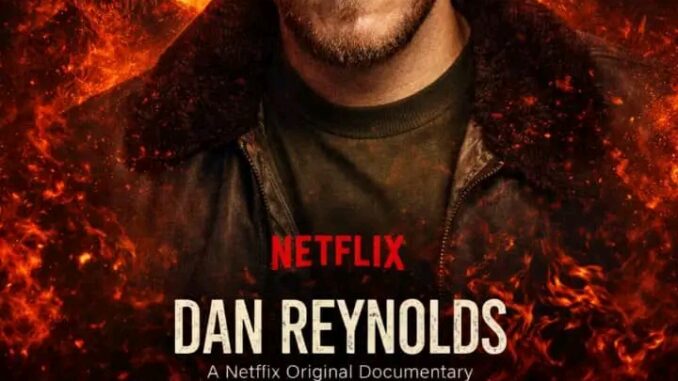
Dan Reynolds’ Story Told in Cinema 📽️ — As Netflix Exposes the Dark Side of Fame…
The screen opens on a stadium trembling with sound. Thousands chant his name, lights blaze like artificial suns, and at the center stands Dan Reynolds—silhouette tall, chest rising, voice powerful enough to shake the night. From the outside, it looks like victory. But Netflix doesn’t linger on the applause. The camera follows him offstage, into silence, where the real story begins.
Cut to darkness. The monsters arrive quietly.
They are not claws and fangs, but pressure, doubt, and pain—far more ruthless because no one can see them. Fame, the film suggests, didn’t crown Dan Reynolds; it hunted him. Each chart-topping song raised expectations higher, each sold-out tour demanded more blood from a body already breaking. Ankylosing spondylitis turns his spine into a battlefield, every movement a negotiation with pain. The monster of chronic illness doesn’t roar—it waits.
Flashbacks slice through the narrative: a young Dan in Utah, faith wrapped tightly around his identity, music blooming before he knew it could save him. Then the fracture—beliefs cracking under questions he wasn’t allowed to ask. The monster of shame creeps in, whispering that doubt equals failure, that honesty costs love. Netflix frames these moments with close-ups, raw and unpolished, as if the camera itself is afraid to blink.
Fame brings its own beasts. The film paints it like a mirror maze—millions watching, none truly seeing. Online praise mutates into judgment in a single scroll. The monster of expectation demands perfection while offering no mercy. Dan collapses between tours, not from weakness, but from carrying too much for too long.
Then the turning point.
Instead of slaying the monsters, Dan faces them. The cinema slows. He writes. He screams lyrics into microphones like confessions. He strips onstage not for spectacle, but for survival—baring scars, vulnerability, truth. Mental health, masculinity, self-acceptance become weapons. The monster of silence loses power when named.
In the final scenes, the stadium returns—but it feels different now. The crowd sings with him, not at him. The monsters haven’t vanished. Netflix doesn’t lie about that. They still follow, shadows at the edge of the frame. But Dan Reynolds no longer runs.
The credits roll on a quiet truth: fame didn’t make him strong. Facing the darkness did.
And that is the story that shocks—because the bravest battle wasn’t on stage. It was inside.
Leave a Reply