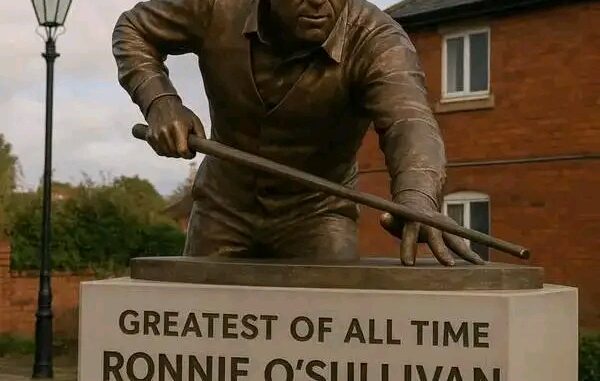
𝕀𝕟 𝕒 𝕞𝕠𝕞𝕖𝕟𝕥 𝕥𝕙𝕒𝕥 𝕔𝕖𝕞𝕖𝕟𝕥𝕤 𝕙𝕚𝕤 𝕤𝕥𝕒𝕥𝕦𝕤 𝕒𝕤 𝕥𝕙𝕖 𝕘𝕣𝕖𝕒𝕥𝕖𝕤𝕥 𝕤𝕟𝕠𝕠𝕜𝕖𝕣 𝕡𝕝𝕒𝕪𝕖𝕣 𝕠𝕗 𝕒𝕝𝕝 𝕥𝕚𝕞𝕖, ℝ𝕠𝕟𝕟𝕚𝕖 𝕆’𝕊𝕦𝕝𝕝𝕚𝕧𝕒𝕟 𝕙𝕒𝕤 𝕓𝕖𝕖𝕟 𝕙𝕠𝕟𝕠𝕣𝕖𝕕 𝕨𝕚𝕥𝕙 𝕒 𝕝𝕚𝕗𝕖-𝕤𝕚𝕫𝕖𝕕 𝕤𝕥𝕒𝕥𝕦𝕖…
In a moment that cements his status as the greatest snooker player of all time, Ronnie O’Sullivan stands not at the baize, cue in hand, but beneath the quiet gaze of bronze. The life-sized statue captures him mid-stride, shoulders loose, cue resting lightly as if the next frame is already unfolding in his mind. It is a still image of motion, and fittingly so, because O’Sullivan has always seemed to play a different game—one faster, freer, and more daring than anyone before him.
For decades, snooker bent itself around his genius. He rewrote expectations with a blend of ruthless precision and instinctive creativity, compiling breaks that felt less constructed than unleashed. Where others calculated, he flowed. Where pressure tightened hands, it sharpened his focus. Records followed almost incidentally: world titles, centuries, maximum breaks, longevity at the very top. Yet numbers alone never explain why Ronnie O’Sullivan became something larger than the sport itself.
This statue honors not just achievement, but transformation. O’Sullivan dragged snooker out of its rigid past and into a modern era, proving it could be thrilling, emotional, and fiercely human. He showed that vulnerability and brilliance could coexist, that honesty about struggle did not weaken greatness but deepened it. Fans did not merely watch him win; they watched him evolve, stumble, question, and return stronger. In doing so, he gave the game a pulse.
The likeness in bronze is calm, almost understated. That, too, feels right. For all the fireworks of his play, O’Sullivan’s truest dominance was quiet: a devastating safety exchange, a perfectly judged cannon, a break built at a pace that left opponents stranded in their seats. He made the extraordinary look inevitable. The statue freezes that inevitability, reminding future generations that mastery can look effortless when talent meets relentless dedication.
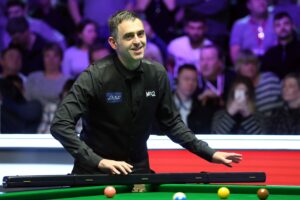
Around the statue, fans gather—some who grew up idolizing him, others discovering his legacy for the first time. They point, they smile, they remember frames that felt impossible until he made them routine. In that shared memory lies his true monument. Long after cues are laid down and tables re-clothed, Ronnie O’Sullivan’s influence will endure, shaping how the game is played and imagined.
This is more than a tribute. It is a declaration. The Rocket’s journey is now etched into history, not only in record books, but in form and figure. The greatest of all time no longer just belongs to the arena; he stands timeless, a symbol of what snooker can be when genius is given full flight.
Leave a Reply