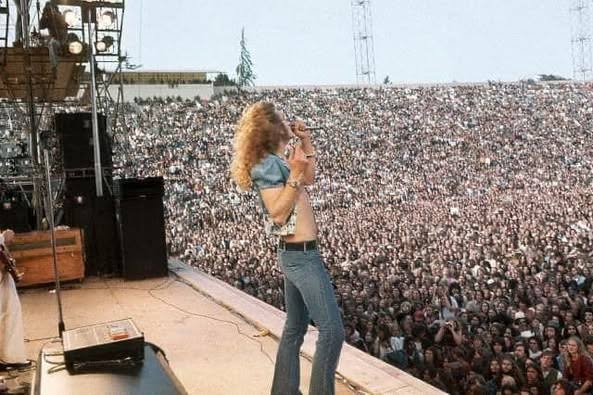
Chaos and Glory: Led Zeppelin’s Explosive July 23, 1977, Concert in Oakland
Oakland, CA – July 23, 1977
On a sweltering Saturday in the heart of the Bay Area, Led Zeppelin stormed the Oakland Coliseum with a performance that would go down as one of the most dramatic and controversial nights in the band’s storied career. Part of their massive 1977 North American tour—what would tragically become their last in the U.S.—the July 23rd concert was a night of blistering rock, raw energy, and behind-the-scenes tension that would forever etch itself into the lore of rock and roll.
By the summer of ’77, Led Zeppelin was riding high on the momentum of their latest album, Presence, and the promise of their upcoming In Through the Out Door. Fans filled stadiums across the country in anticipation of witnessing the band’s legendary live performances, and the Oakland Coliseum was no exception. More than 60,000 fans packed the venue for the two-night stand promoted by Bill Graham, one of the most powerful figures in rock concert promotion.
The show opened with thunderous force. Jimmy Page, clad in his signature white dragon suit, unleashed a blistering guitar assault with the opening chords of “The Song Remains the Same,” setting the tone for a night of sonic fury. Robert Plant, golden-maned and charismatic as ever, commanded the stage with his banshee wail and electric presence. The rhythm section—John Paul Jones on bass and keyboards, and John Bonham on drums—was locked in tight, anchoring the show with brutal precision and finesse.
The band powered through a two-hour set that included iconic tracks like “Kashmir,” “No Quarter,” “Achilles Last Stand,” and the perennial favorite “Stairway to Heaven.” Page’s guitar solos were ferocious and hypnotic, particularly during his bow-scraping theatrics in “Dazed and Confused.” Bonham’s drum solo in “Moby Dick” brought the house down, a thunderous reminder of his unmatched prowess behind the kit.
But while the performance onstage was electric, events unfolding behind the scenes were anything but harmonious.
Tensions had been simmering throughout the tour, exacerbated by physical exhaustion, personal turmoil, and a security team prone to volatility. That day, a backstage altercation escalated into a full-blown incident involving members of Led Zeppelin’s entourage and Bill Graham’s security staff. The initial spark was a dispute between a member of Graham’s crew and a Led Zeppelin staffer, which spiraled into a violent confrontation.
The most notorious moment came when John Bonham and manager Peter Grant’s teenage son were reportedly shoved by a member of Graham’s security. In retaliation, Bonham, Grant, and tour manager Richard Cole allegedly beat the man severely in a trailer backstage. The incident would later result in assault charges and cast a dark shadow over the triumph of the performance itself.
Despite the backstage chaos, Led Zeppelin completed the show with an encore that included “Rock and Roll” and a ferocious version of “Whole Lotta Love,” sending the crowd into a frenzy. But the tension was palpable. The next night, the band returned for their second show in Oakland, but the aftershocks of the prior day’s events lingered.
As the dust settled, the July 23rd concert became symbolic of the end of an era. Less than two weeks later, Robert Plant received the devastating news that his young son Karac had died suddenly of a viral infection, prompting the band to cancel the remainder of the tour. They would never again tour North America.
In retrospect, the Oakland concert stands as both a pinnacle of Led Zeppelin’s live power and a portent of the personal and professional troubles that would follow. The band was at the height of their musical powers, but fraying at the edges—a volatile mixture of brilliance, excess, and inevitable burnout.
Bootleg recordings of the show, often titled For Badgeholders Only, have circulated among fans for decades, preserving what many consider one of the band’s most vital performances. The energy, the drama, the raw, unfiltered power of Led Zeppelin that night encapsulated everything that made them legends—and everything that eventually led to their demise.
Nearly five decades later, the July 23, 1977, concert remains a landmark in rock history—a night when the gods of rock played through the fire, leaving behind a scorched and unforgettable memorys.
Leave a Reply