Led Zeppelin’s Final U.S. Show: A Fiery Farewell at Oakland Coliseum, July 24, 1977
By Staff Writer – Music & Culture Desk
On July 24, 1977, the mighty Led Zeppelin took to the stage at the Oakland Coliseum in California for what would unknowingly become their final concert in the United States. The band, then at the height of their fame and still reeling from the seismic impact they’d made on rock and roll throughout the 1970s, delivered a powerful, if turbulent, performance that now stands as a historic moment in the annals of rock history.
The show was the second of a two-night stand in Oakland, part of their sprawling 1977 North American tour. It was a sun-drenched California afternoon as fans poured into the 60,000-seat stadium. Long-haired devotees in denim and tie-dye filled the stands, the air thick with anticipation—and marijuana smoke—as the band’s unmistakable insignia adorned flags and shirts throughout the crowd.
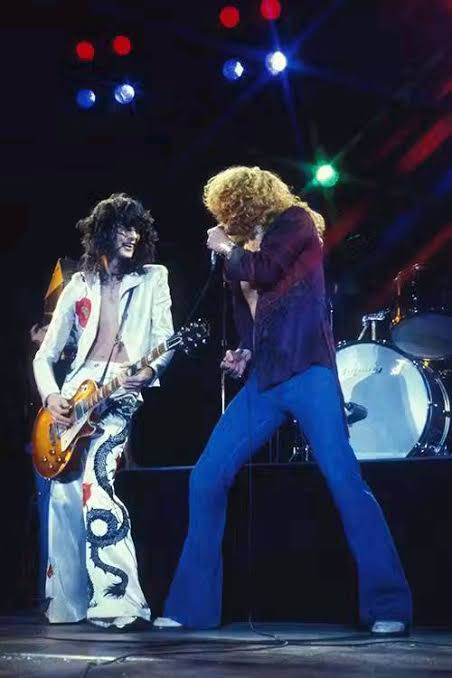
Guitarist Jimmy Page, dressed in his now-iconic white dragon suit embroidered with gold and green threads, opened the set with a searing version of “The Song Remains the Same.” The sound of his Les Paul cut through the heavy summer air like a blade. Backed by the thunderous drumming of John Bonham, the nimble bass of John Paul Jones, and the shrieking vocals of Robert Plant, the band wasted no time in reminding fans why they were considered gods of rock.
Page’s guitar solos were electric, ethereal, and chaotic—particularly during the epic “No Quarter,” where he and Jones engaged in a tense, atmospheric duel. “Achilles Last Stand,” another highlight, featured Plant in full voice, his golden mane catching the late afternoon light as he howled through the complex arrangement. The band’s power, though slightly frayed at the edges, still came through like a sonic earthquake.
But the performance was shadowed by tension and drama behind the scenes. Just a day earlier, violence had erupted backstage between members of Led Zeppelin’s security team and local promoter Bill Graham’s staff. The altercation, sparked by a confrontation over access and security protocols, led to the arrest of several of Zeppelin’s entourage, including tour manager Richard Cole and Bonham himself. Graham, a longtime rock impresario, was left furious, and though the second night’s show proceeded as planned, the relationship between the band and the promoter was irreparably damaged.
Still, onstage, the band soldiered on with professionalism and fire. “Kashmir,” already a classic by then, was a highlight of the evening, its haunting riff filling the stadium with a mystic energy. Plant, though visibly strained at times, dedicated the song “to the people of California,” drawing roars of approval from the audience.
Perhaps the most poignant moment came during the extended version of “Stairway to Heaven.” Page’s solo was a masterclass in dynamic control, beginning with delicate flourishes before ascending into a crescendo of distortion and emotional release. Plant’s final line—“And she’s buying a stairway to heaven”—hung in the air like a ghost, as thousands of lighters flickered in the stands.
The encore, a wild rendition of “Rock and Roll,” brought the crowd to its feet one last time. Bonham, known as much for his ferocity as his finesse, pounded his kit with abandon. It was a moment of musical fury and joy, tinged with an unspoken sense of finality. As Plant thanked the crowd and the band took their bows, few knew it would be their final bow on American soil.
Led Zeppelin’s 1977 tour was abruptly canceled just days later after Robert Plant received news of the death of his five-year-old son, Karac. Devastated, Plant returned to England, and the band went into hiatus. Though they would regroup for recording sessions and a handful of performances in Europe, they never toured the United States again.
John Bonham’s death in 1980 effectively ended Led Zeppelin as a touring entity, making that sun-soaked Oakland concert their last American stand. Today, fans and historians look back on July 24, 1977, not only as a powerful performance, but as the closing chapter of Zeppelin’s legendary reign over American rock.
In the decades since, bootleg recordings, photographs, and firsthand accounts have kept the memory of that concert alive. Though tarnished by controversy, the performance remains a testament to Led Zeppelin’s enduring power, charisma, and raw musical genius—a final roar from a band that changed the world..
Leave a Reply